
Agnikarma in Mira Bhayandar
Pain that refuses to leave changes the way a person lives, and finding the right Ayurveda doctor in Mira Bhayandar makes all the difference. When joints, tendons, or nerves stay inflamed, even climbing stairs or sitting through a meal becomes a quiet struggle. For thousands of years, Ayurveda has answered this with a procedure as precise as it is ancient, Agnikarma.
Ayurveda views chronic pain not as an isolated joint problem but as a sign of deeper Vata or Kapha imbalance, often combined with toxin accumulation (Ama) at the affected site. At Madhavbaug Ayurvedic Clinic in Mira Bhayandar, Agnikarma is performed using classical Panchadhatu instruments and precise marma point identification, giving patients lasting relief from heel pain, knee pain, sciatica, frozen shoulder, and other chronic conditions.
Dr. Gayatri Damodaran explains, “Agnikarma applies focused therapeutic heat to the exact point where pain originates, and patients often feel relief within the same sitting.”
Let’s take a deeper look at what Agnikarma really is.
Agnikarma – An Overview
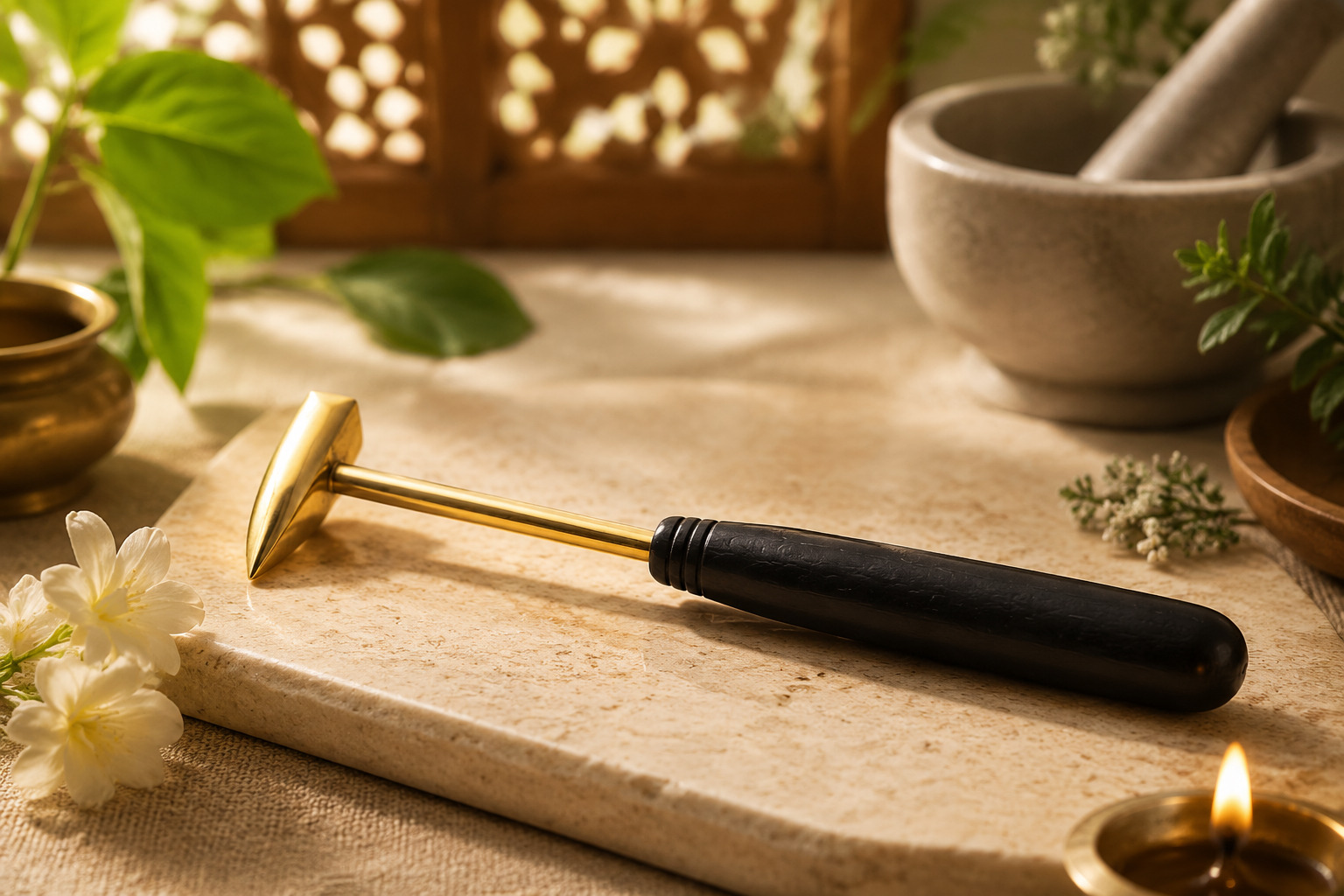
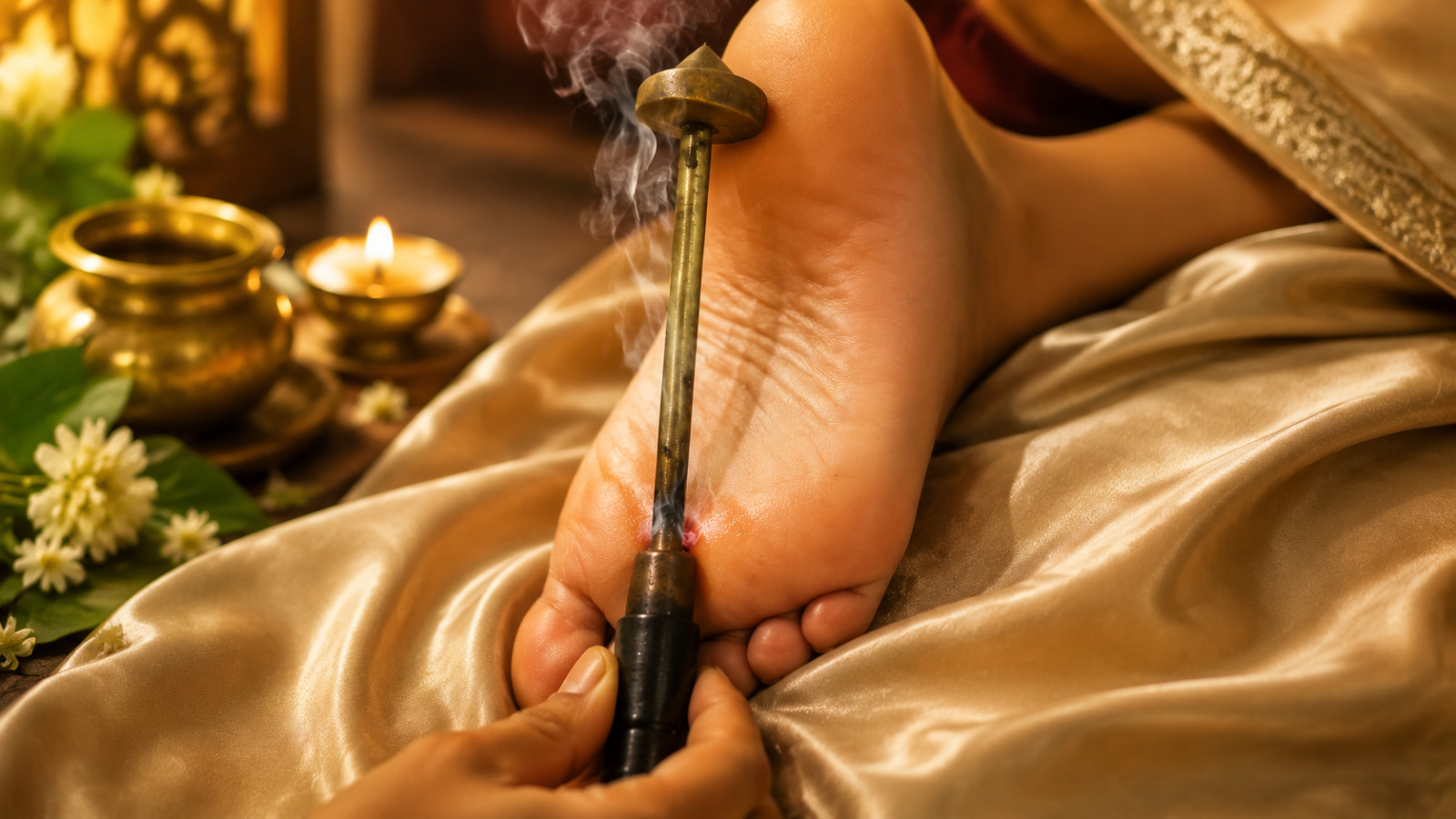
Agnikarma is one of Ayurveda’s most refined para-surgical procedures, described in detail by the ancient surgeon Sushruta in the Sushruta Samhita. It involves applying controlled therapeutic heat to specific points on the body using a heated metal instrument called Shalaka. The instrument is most often made of five metals (Panchadhatu, gold, silver, copper, iron, and lead), each chosen for the kind of tissue and depth of pain being treated.
When chronic pain settles into joints, tendons, or nerve pathways, oral medication and external oils often cannot reach deep enough. Agnikarma delivers concentrated heat to the pain point in fractions of a second, breaking the cycle of inflammation, stimulating circulation, and resetting how the nervous system processes pain.

Living with chronic pain that hasn’t responded to standard treatment? Speak with an Ayurvedic expert to find out whether Agnikarma is right for your condition.
Now that we understand the basics, not all pain conditions need the same Agnikarma approach. Here’s where it works best.
Understanding the Different Applications of Agnikarma
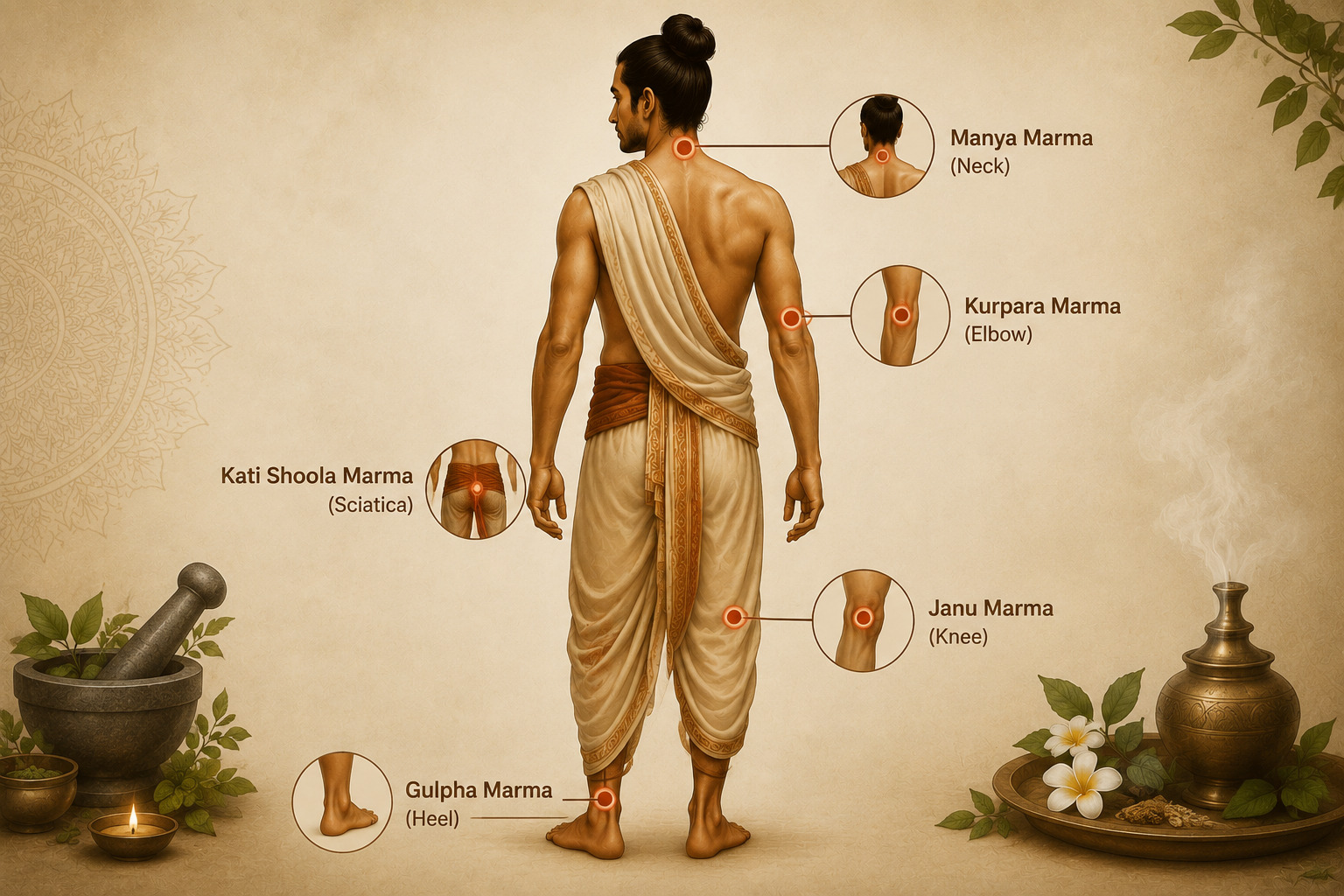
Agnikarma is condition-specific. The choice of marma point, depth, and instrument depends entirely on what is being treated. The most common applications include:
Dr. Gayatri Damodaran, a trusted Ayurveda specialist in Mira Bhayandar, shares:
“Recognising the right marma point is everything in Agnikarma. The right point, the right depth, the right contact time, that is what separates lasting relief from a procedure that just leaves a mark.”
| Condition | Modern Medical Perspective | Ayurvedic Understanding |
|---|---|---|
| Plantar Fasciitis | Inflammation of the plantar fascia, often with calcaneal spur. | Aggravated Vata at Vatakantaka marma point, eased by direct thermal stimulation. |
| Knee Osteoarthritis | Wear and tear of cartilage, reduced joint cushioning. | Sandhivata, Vata dryness in the joint that responds to focused heat. |
| Sciatica | Compression or irritation of the sciatic nerve. | Gridhrasi, Vata moving along nerve channels, pacified through Agnikarma. |
| Cervical Spondylosis | Degenerative changes in cervical discs. | Manyastambha, neck stiffness due to localised Vata stagnation. |
| Tennis Elbow / Frozen Shoulder | Tendinitis or capsular tightness around the joint. | Apabahuka, focal Vata aggravation relieved by precise thermal application. |
Unsure whether your condition is suitable for Agnikarma? Get a professional Ayurvedic evaluation for a personalised care plan.
Knowing the applications helps, but understanding what brings pain to this stage tells us where Agnikarma fits best.
Causes of Chronic Pain That Agnikarma Addresses
In Ayurveda, chronic pain develops when Vata dosha becomes imbalanced and combines with toxins (Ama) at specific joints, tendons, or nerve channels. Common contributing factors include:
Prolonged sedentary work and poor posture
Repetitive strain from daily or professional activities
Old injuries that never fully healed
Cold and damp weather aggravating Vata
Long-term painkiller dependence without addressing the root cause
Age-related tissue degeneration
Over time, these factors create a fixed pain pattern that oral medication cannot easily reach. Agnikarma is designed precisely for this stage.
Spotting the right symptoms helps decide whether Agnikarma is suited to your case.
Symptoms Where Agnikarma Becomes the Right Choice
Agnikarma is most effective when pain has settled into a specific, identifiable point. Tell-tale signs include:
Persistent localised pain that worsens with rest or weather changes
Sharp morning heel pain that eases after a few steps
Knee pain that limits climbing stairs or sitting cross-legged
Sciatica radiating from the lower back into the leg
Stiffness in the neck or shoulder that limits daily movement
Pain that returns each time painkillers wear off
Dr. Gayatri Damodaran, a reputed Ayurvedic physician in Mira Bhayandar, explains:
“Agnikarma is both diagnostic and therapeutic. How the patient responds in the first sitting tells us a great deal about the depth of imbalance and how the course should go.”
Now that we know what Agnikarma treats and when it helps, let’s see how treatment unfolds.
Ayurvedic Approach to Agnikarma Treatment
The treatment is delivered in a structured protocol that Dr. Gayatri personalises based on each patient’s condition and dosha constitution.
Marma-Based Assessment:
Examination, marma point mapping, and review of imaging reports where available.
Agnikarma Procedure:
The Panchadhatu Shalaka is heated and applied to marked points for fractions of a second, creating a controlled therapeutic burn known as Samyak Dagdha.
Combined Panchakarma Support:
For systemic conditions, Agnikarma is paired with Panchakarma and herbal formulations like Yogaraj Guggulu and Dashmoolarishta.
Lifestyle Correction:
Anti-Vata diet, gentle yoga, and a daily routine that protects the treated area.
Tired of managing pain instead of addressing it? Consult an Ayurvedic specialist to design a focused Agnikarma plan for your condition.
Curious about real outcomes? Let’s look at how effective Agnikarma truly is for chronic pain.
Success Rate – How Effective is Agnikarma Treatment
At Madhavbaug Ayurvedic Clinic in Mira Bhayandar, patients consistently report meaningful relief within the first 2 to 3 sessions. Clinical evidence suggests Agnikarma can reduce chronic musculoskeletal pain by 60 to 80 percent when combined with herbal support and lifestyle correction. Heel pain and tennis elbow often resolve in 3 to 5 sittings, while cervical spondylosis or sciatica may need 5 to 7. The Ministry of AYUSH, Government of India recognises Agnikarma as an evidence-backed Ayurvedic procedure for chronic pain.
Dr. Gayatri Damodaran, an experienced Ayurvedic consultant in Mira Bhayandar, adds:
“The effectiveness of Agnikarma lies in precision. Each session is personalised, the depth, the duration, the choice of point, that is what makes the relief last.”
What sets Dr. Gayatri apart from other practitioners? Let’s understand her approach.
Why Choose Ayurveda Doctor Gayatri Damodaran?

Classical Training:
Hands-on expertise in Sushruta’s para-surgical techniques applied in a modern clinic setting.
Marma-Based Precision:
Detailed marma point mapping ensures therapeutic heat reaches the exact source of pain.
Customised Protocols:
Every session is tailored to the patient’s dosha, pain pattern, and history.
Integrated Care:
Combined with Ayurvedic detox therapies and herbal support for deeper outcomes.
Proven Experience:
Over 8 years of clinical practice in Agnikarma, Panchakarma, and chronic pain management.
Let’s take a closer look at the full Agnikarma care journey at our clinic.
Our Comprehensive Agnikarma Care Approach
The Agnikarma care model at Madhavbaug Ayurvedic Clinic combines classical technique with modern diagnostic support.
Initial Assessment:
Examination of the affected area, marma mapping, and review of medical history.
Agnikarma Procedure:
Precise application of controlled therapeutic heat under expert supervision.
Recovery Support:
Healing ointments, dietary guidance, and follow-up to track progress.
Maintenance Plan:
Herbal support, arthritis treatment protocols where relevant, and lifestyle correction for lasting relief.
Dr. Gayatri Damodaran, a compassionate Ayurvedic practitioner in Mira Bhayandar, says:
“Our focus is not on temporary relief but on rebuilding how the body holds pain. When the channel opens correctly and Vata settles, the pain doesn’t keep returning.”
Ready to step away from painkillers and into lasting relief? Speak to an Ayurvedic expert to design a natural Agnikarma plan for your needs.
Frequently Asked Questions
1. Is Agnikarma painful?
The procedure involves a brief, controlled application of heat lasting only fractions of a second at each point. Most patients describe it as a quick, sharp sensation followed by immediate relief.
2. How many sessions of Agnikarma will I need?
Most conditions respond within 3 to 7 sessions, one week apart. Tennis elbow may resolve in 2 to 3 sittings, while cervical spondylosis may need more.
3. Are there any side effects of Agnikarma?
Mild redness or a small burning sensation at the treated point is normal and settles within 2 to 3 days. Performed by a trained doctor, Agnikarma is one of the safest para-surgical procedures in Ayurveda.
4. Can Agnikarma be done along with my current medication?
Yes. Dr. Gayatri reviews your current medication before the procedure and adjusts the plan to avoid any interaction. Many patients gradually reduce their painkiller dependence.
5. Who is the best doctor for Agnikarma in Mira Bhayandar?
Dr. Gayatri Damodaran at Madhavbaug Ayurvedic Clinic, Bhayandar East, is a trusted Ayurveda specialist with over 8 years of clinical experience in Agnikarma and personalised chronic pain management.
Disclaimer: The information shared in this content is for educational purposes and not for promotional use.
