
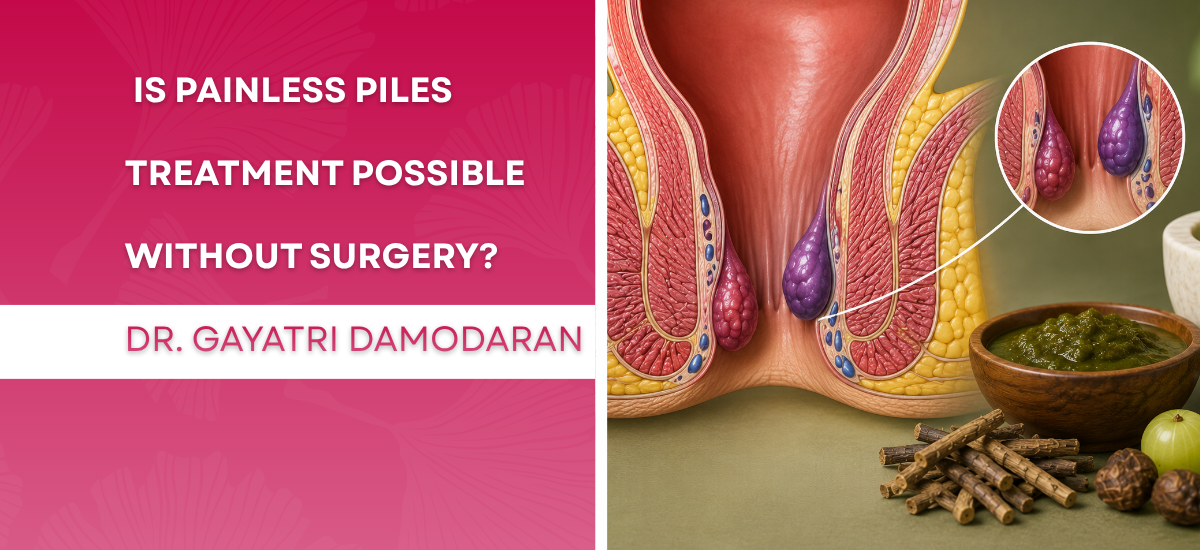
Yes, surgery is not the only way out. Grade 1 and 2 piles clear up with the right Ayurvedic plan in most cases, and even Grade 3 can be handled without going under the knife. Mild cases need lifestyle work and herbs. Moderate ones need a simple outpatient procedure, no admission, no stitches. In Ayurveda, piles, called Arsha, start when Apana Vata loses its strength and Kapha-Pitta together inflame and thicken the rectal veins. The gut is where the treatment starts.
According to Dr. Gayatri Damodaran, an Ayurveda Doctor in Mira Bhayandar, “Most patients walk in fear of the knife. What surprises them is how much can be done without it. Piles in the early grades are a digestion problem wearing a surgical mask. Correct that and the swelling follows.”
Why do piles develop and keep coming back?
Piles don’t start in the rectum. They start further up, in the gut, in daily habits, and in how the body has been handling waste for years.
- Weak Apana Vata: Apana governs downward movement in the body. When it weakens from irregular meals, screen time, and poor sleep, waste stagnates. Straining at stool does the rest.
- Kapha-Pitta aggravation: Spicy food inflames the rectal lining. Heavy, oily food thickens the veins. Together they create the internal environment where hemorrhoids thrive.
- Chronic constipation: The single biggest trigger. Hard stools, repeated straining, and incomplete evacuation put sustained pressure on the rectal veins until they swell and stay swollen.
- Sedentary posture: Sitting for hours compresses pelvic circulation. Desk workers and drivers see this pattern often. The veins never fully decompress between episodes.
The recurrence problem in surgical piles treatment happens because the gut isn’t fixed. The veins get removed but the pressure comes back. A proper painless piles treatment plan addresses what the operation leaves behind.
What does Ayurvedic piles treatment actually involve?
Grade 1 and 2 cases can be managed entirely without procedures. Grade 3 sometimes needs Kshar Karma alongside herbs. Either way, the treatment is outpatient and recovery is usually within a day or two.
- Kshar Karma: A herbal alkaline preparation is applied to the hemorrhoidal tissue to shrink it. No cuts, no stitches. It’s the Ayurvedic equivalent of a minimally invasive procedure and the one most patients say they wish they’d known about earlier.
- Abhayarishta, Triphala Guggul, Arshoghni Vati: Each targets a different layer one softens stool and regulates bowel movement, one reduces inflammation in the venous tissue, one stops bleeding and promotes healing. Prescribed in combination, not separately.
- Basti therapy: Medicated enema clears the colon of the backed-up waste driving the pressure. For stubborn Grade 2 cases with chronic constipation, this often breaks the cycle where herbs alone haven’t.
- Diet and routine correction: High-fibre meals, warm water through the day, no dry or cold food. Sleep and movement timed so Apana Vata can do its job. These changes hold the treatment results after the acute phase clears.
Most patients resume normal activity within 48 hours. The ones who come back with recurrence are almost always the ones who dropped the diet changes once symptoms cleared. The gut needs consistent management, not just acute treatment. Digestive health connects to other chronic conditions too if fatty liver is also a concern, this fatty liver blog covers that picture.
Why Choose Dr. Gayatri Damodaran for Piles Treatment?
Dr. Gayatri Damodaran approaches piles as a metabolic and digestive problem, not just a local one. At Madhavbaug Ayurvedic Clinic, every piles case is assessed for the underlying gut imbalance before any procedure or prescription is decided. Patients on allopathic laxatives or stool softeners aren’t told to stop. The Ayurvedic plan runs alongside and gradually removes the dependency.
Grade 1 and 2 cases typically resolve within four to six weeks. Grade 3 with Kshar Karma and herbal support usually clears in six to eight weeks, with far lower recurrence than surgical options when the gut correction is followed through.
Book a Consultation with Dr. Gayatri Damodaran today to explore non-surgical, painless piles treatment options and find relief.
Frequently Asked Questions
Can Ayurveda permanently cure piles without surgery?
For Grade 1 and 2, yes. Grade 3 sometimes needs Kshar Karma but that still isn’t surgery. Fix the gut and they don’t come back.
Is Kshar Karma painful?
Mild discomfort, that’s about it. Day procedure. No admission, no stitches, most patients go home within a few hours.
How long does Ayurvedic piles treatment take?
Four to six weeks for most Grade 1 and 2 cases. Longer if the constipation is chronic or the diet changes are inconsistent.
What foods should be avoided in piles?
Spicy food, fried snacks, refined flour, red meat, alcohol. Anything that heats the gut or hardens the stool makes things worse.
Disclaimer:
This blog is for informational and educational purposes only and is not a substitute for professional medical advice, diagnosis, or treatment. Please consult Ayurvedic or healthcare professional for guidance specific to your condition.

