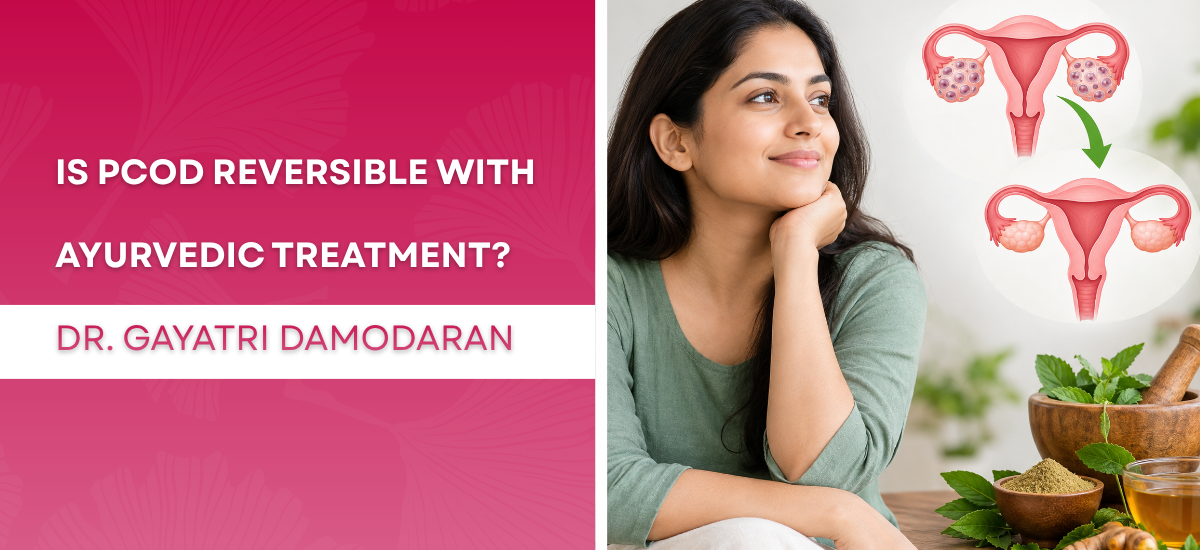
Ayurvedic treatment can bring PCOD into remission in many women, and regular periods are usually the first thing to come back. Modern medicine says PCOD can be controlled but not cured. Ayurveda goes after the cause behind it.
According to Dr. Gayatri Damodaran, Ayurveda Doctor in Mira Bhayandar, “Most patients think PCOD is only about the ovaries, but it’s really a hormone and metabolism problem that builds over years. Ayurvedic treatment of PCOD works on that, so improvement is gradual.”
What Causes PCOD According to Ayurveda?
It’s rarely down to one thing. In most women a few of these imbalances overlap.
Kapha accumulation: This is what’s behind the weight gain, the slow metabolism, and the follicles that show up on a scan.
Pitta imbalance: Pitta is behind the acne, the extra facial hair, and the short temper that often go with PCOD.
Vata disruption: Late, skipped, or unpredictable periods. Since Vata runs the menstrual flow, a disturbed Vata means cycles that don’t keep to a schedule.
Weak Agni and Ama buildup: When digestion is weak, Ama builds up and insulin resistance tends to follow, and that keeps the rest of it going.
Because PCOD tends to bring insulin resistance and thyroid disorder along with it, it falls under Metabolic and Endocrine Health and not under ovarian problems alone.
How Does Ayurvedic Treatment of PCOD Work?
No single herb does this. It’s a set of corrections that run together.
Herbal formulations: Shatavari, Ashoka, and Lodhra are the herbs most often used for period regulation. They take a few months to show any effect.
Shodhana therapies: Virechana, a Panchakarma purgation therapy, is used to clear Ama and calm Pitta. Research on it is limited, mostly case reports so far.
Diet correction: The diet is matched to the person’s dosha and digestive capacity, with the aim of improving insulin sensitivity and maintaining a healthy weight.
Stress and sleep correction: Because chronic stress keeps cortisol high and cycles irregular, this part isn’t optional.
Learn more about the connection between PCOD and other hormonal imbalances in Ayurveda Hormone Balance.
What Lifestyle Changes Help With PCOD?
Treatment on its own rarely does the whole job. The women who do well have usually changed their daily routine too, and kept to it for months.
Weight management: Even a small amount of weight loss can bring periods back on track and improve insulin response, but crash dieting tends to backfire.
Regular movement: Brisk walking, yoga, or light weights all help the body respond to insulin, and it’s the regular habit that counts, not the intensity.
Fixed meal and sleep timing: Eating and sleeping at odd hours upsets Agni and the hormones, so keep both fairly regular day to day.
Stress reduction: Slow breathing, enough sleep, and a bit of time off every day help lower cortisol, and the cycle usually follows.
Anyone having difficulty managing their weight can explore Sustainable Weight Loss through Ayurveda.
Key Takeaways: PCOD can usually be managed into remission, though it isn’t a one time cure. Ayurvedic treatment of PCOD targets the dosha imbalance, digestion, and stress underneath, and the results are better when daily habits support it for several months.
Wondering how Ayurveda fits alongside your current PCOD care?
Frequently Asked Questions
Can PCOD be completely cured with Ayurveda?
PCOD is usually managed into remission rather than permanently cured. Results depend on how early it’s addressed.
How long does ayurvedic treatment of PCOD take to show results?
Some change usually shows up after a couple of months. Periods usually become regular before other symptoms improve.
Is ayurvedic treatment of PCOD safe with other medication?
It usually can be, provided a qualified doctor is overseeing both treatments together. Prescribed medication shouldn’t be stopped without that doctor’s advice.
Can lifestyle changes alone improve PCOD symptoms?
Mild cases often improve with changes to weight, sleep, and activity alone. In moderate or severe cases, though, medical guidance is still needed alongside.
Disclaimer:
This blog is for educational purposes only. Consult a qualified doctor for PCOD diagnosis and treatment.
