

Many people today take ashwagandha before bed hoping to sleep better. Some feel a difference in a few weeks. Others feel nothing. Dr. Gayatri Damodaran, an Ayurveda doctor in Mira Bhayandar, is asked about ashwagandha at night quite often, especially by patients who feel tired all day but find their mind is still active as soon as they lie down. At Madhavbaug Ayurvedic Clinic, she treats stress-related sleep problems with Ayurvedic therapies. According to her, the first step is to understand what ashwagandha can and cannot do.
“Patients rarely come in asking about sleep first. They tell me their mind won’t slow down at night, and ashwagandha is usually the first thing they’ve already tried.” – Dr. Gayatri Damodaran, Ayurveda Specialist
Tired all day, wide awake at night? Before you try another supplement, find out what is really keeping you up.
Why People Take Ashwagandha in the Evening
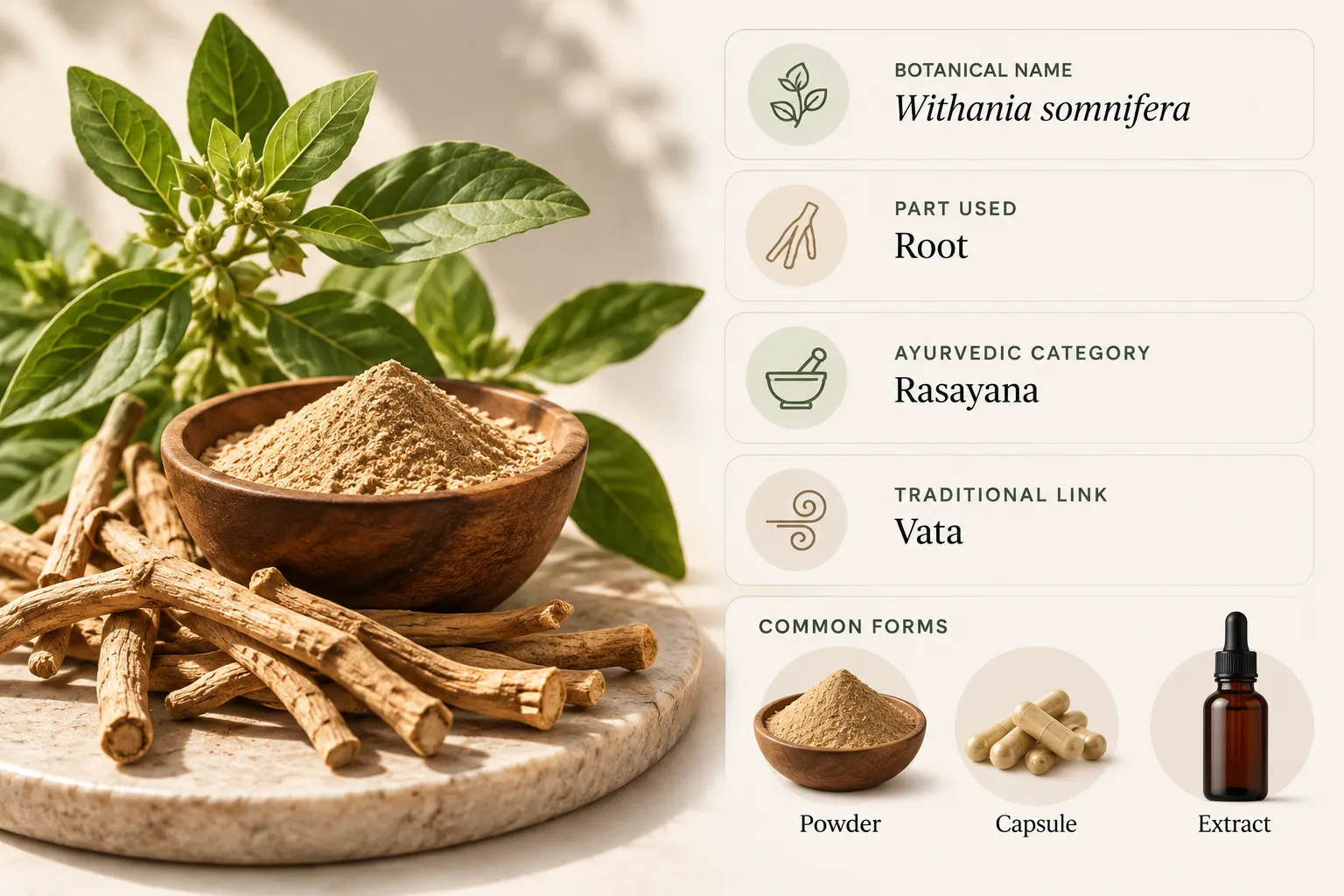
Ashwagandha (Withania somnifera) is a root used in Ayurveda for hundreds of years. It is classed as a rasayana, which means a herb that supports the body’s strength and recovery. Today, people mostly use it to deal with stress. Stress and sleep are closely linked, because a busy mind at 11 p.m. makes it hard to fall asleep. In Ayurveda, this restless state is connected to aggravated Vata, the dosha that governs movement and mental activity. Ashwagandha is traditionally used to calm Vata, which is why it is often taken in the evening.
What the Research Actually Shows
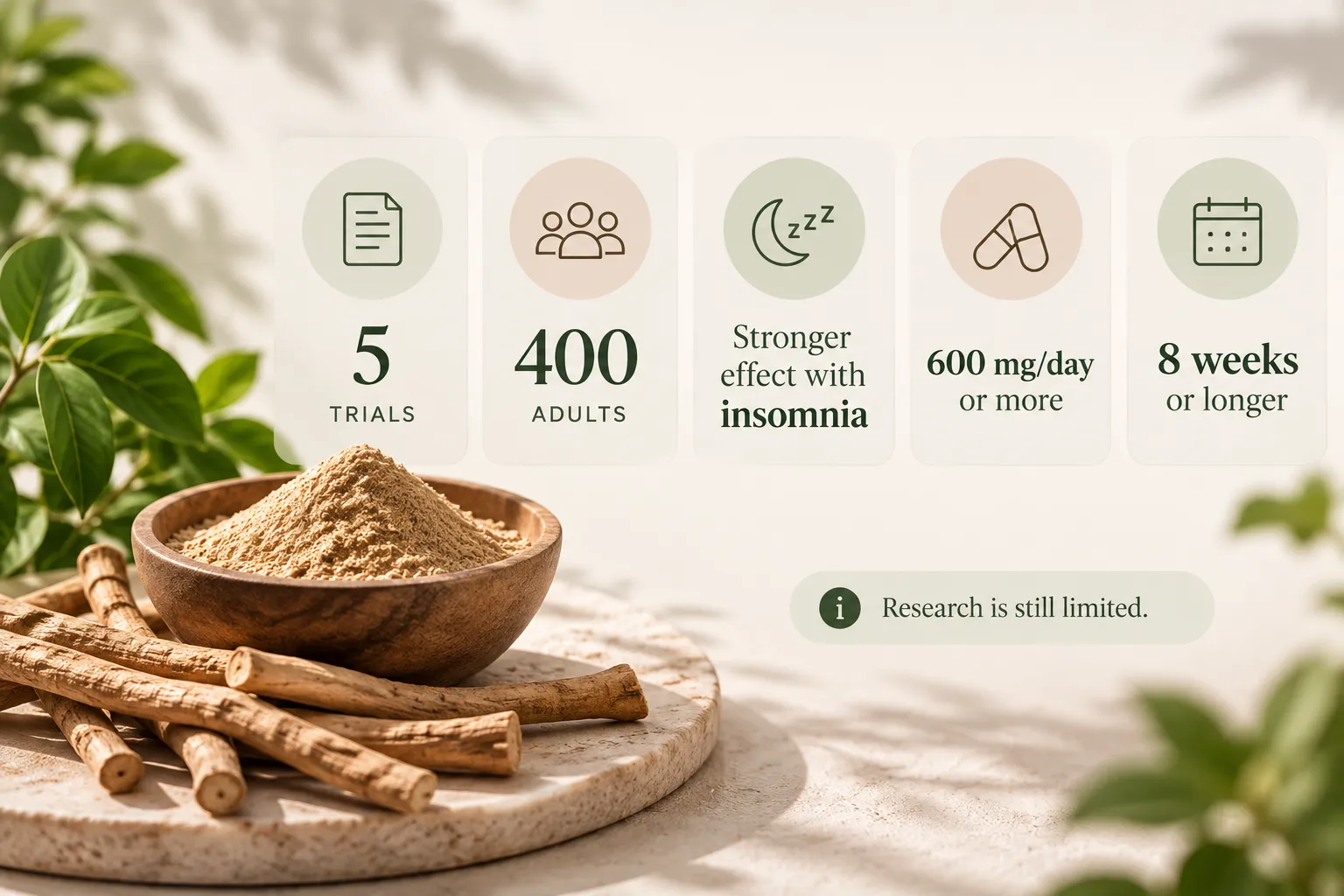
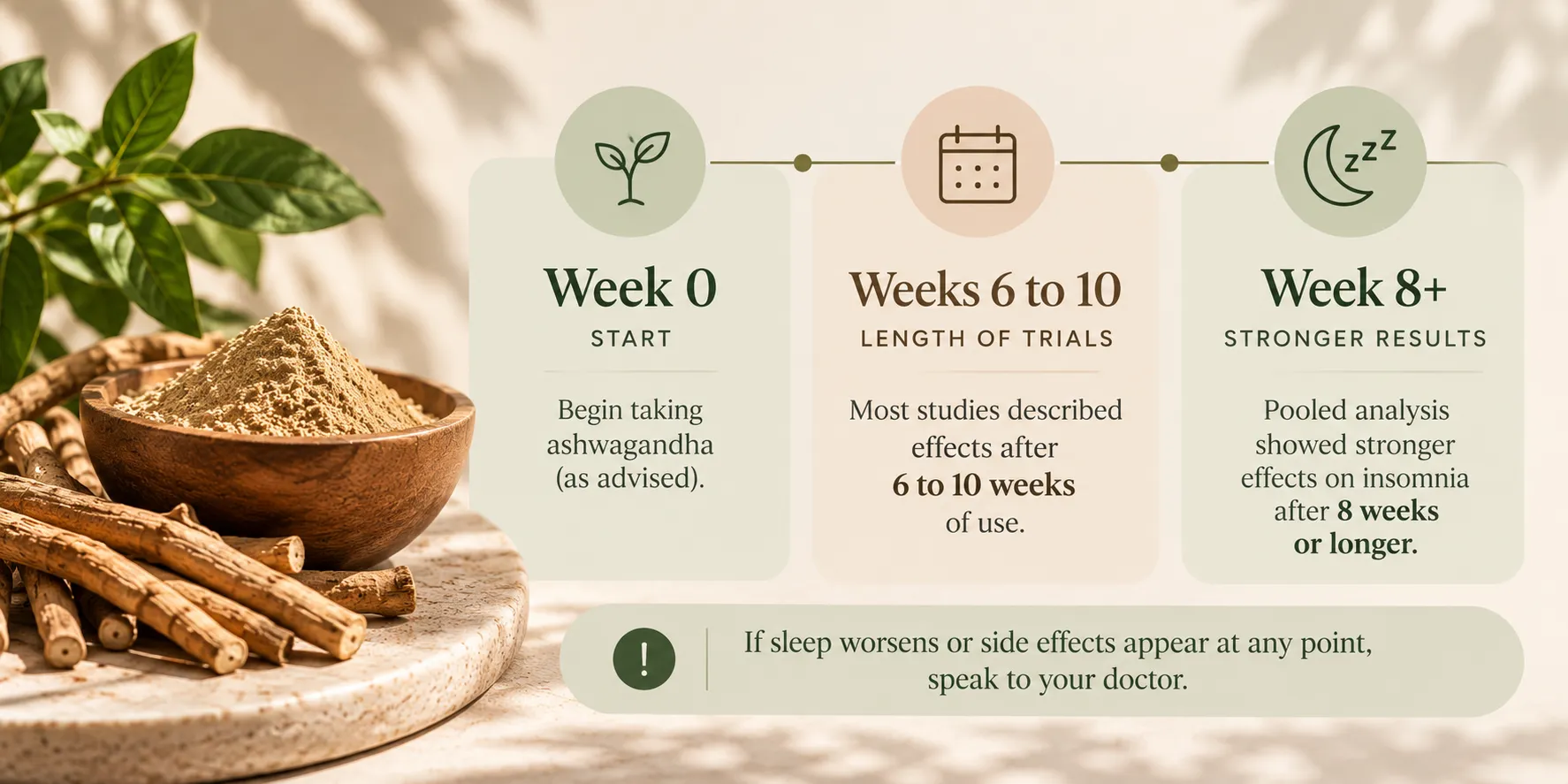
A 2021 research looked at five studies with 400 adults in total. Ashwagandha improved sleep more than a placebo, which is a tablet with no active ingredient. The results were better in people with insomnia, in those taking 600 mg or more per day, and in those who took it for at least eight weeks. In one 10-week study, 60 people with insomnia took 300 mg of root extract twice a day. They fell asleep faster, slept better and had no major trouble with the extract.
The research is still small, though. Long-term safety is not known, and no study has compared night-time use with morning use. So it cannot be said that night is the best time.
“Ashwagandha is not a sleeping pill,” explains Dr. Gayatri. “It works on stress, so any change comes slowly, over a few weeks.”
How Ashwagandha Is Usually Taken at Night
There is no fixed dose. Products differ in strength, and some are made from the root alone while others also use the leaf. The studies used these amounts:
- 300 mg of root extract twice a day for 10 weeks, in the insomnia study
- 600 mg or more per day, where results looked stronger
- Around six to ten weeks of treatment in most studies
In Ayurvedic practice, the powder is often mixed in warm milk in the evening. One small study used this method, and people who took ashwagandha milk had a bigger drop in insomnia scores than the control group. There were only 13 people in each group, so the result is early. The correct form and dose depend on your body type, health history and other medicines, and your doctor should decide it. In classical Ayurveda, herbs like ashwagandha are often given after a cleansing course such as Panchakarma Treatment, so the plan can differ from person to person.
Other Everyday Benefits Worth Knowing
Ashwagandha’s reputation isn’t limited to sleep. Two other areas come up often with patients: heart health and blood sugar.

A few studies have looked at its effect on the heart, and some found lower blood pressure and better cholesterol and triglyceride numbers in people who were stressed or had mild hypertension. The improvement isn’t dramatic, but it’s consistent enough that researchers see it as a genuine, if modest, benefit alongside the herb’s effect on stress.
There’s also early research on blood sugar. One trial followed people with type 2 diabetes, including those who weren’t overweight, and found better insulin sensitivity after taking ashwagandha for a few weeks. This doesn’t mean it can replace diabetes medicine, and anyone on such medicine should only add it with a doctor’s knowledge, since it can affect how those medicines work.
A supplement label cannot ask about your thyroid or the tablets you already take. A doctor can.
Who Should Skip It or Check With a Doctor First
Ashwagandha is a herb, but it still needs care. Please speak to a doctor before using it if:
- You are pregnant or breastfeeding, since it is best avoided
- You have surgery planned
- You have a thyroid or autoimmune condition
- You have cirrhosis or advanced liver disease
- You take regular medicines, as it can interact with those for diabetes, blood pressure, thyroid, seizures, sleep or immunity

“I usually ask patients on thyroid or blood pressure tablets to speak to me before they start anything new,” says Dr. Gayatri. “Herbs can change how those medicines work.”
Side Effects and Warning Signs
Some people get an upset stomach, headache or drowsiness. Drowsiness can be a problem if you have to wake up alert in the morning or if you also take sleeping tablets.
Liver problems are rare but have been reported. They usually start two to twelve weeks after beginning the herb. Signs include yellow skin or eyes and itching, and most people recover within one to four months after stopping. If you notice yellowing, persistent itching, dark urine or pain in the upper right part of the abdomen, stop taking ashwagandha and see a doctor at once.

“I usually ask patients on thyroid or blood pressure tablets to speak to me before they start anything new. Herbs can change how those medicines work.” – Dr. Gayatri Damodaran, Ayurveda Specialist
Night-Time Habits That Work Alongside It
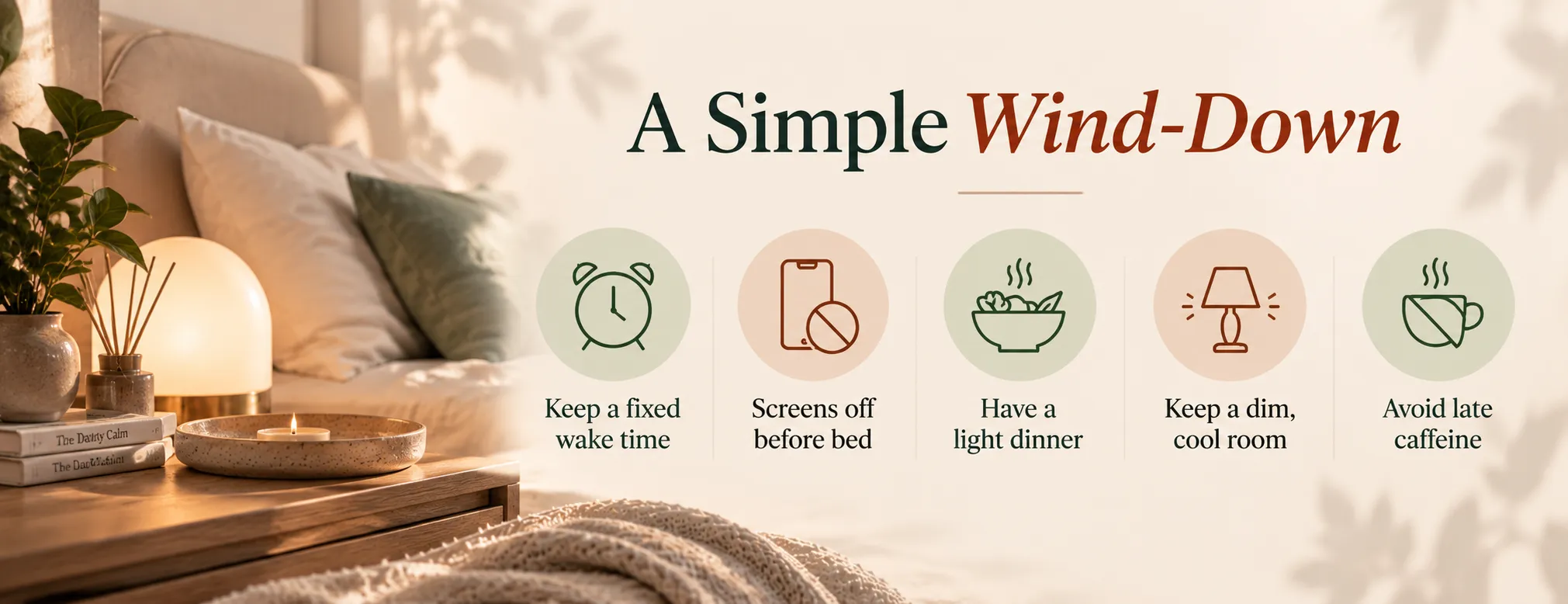
A supplement is only a small part of good sleep. Doctors also rely on sleep habits, relaxation techniques and cognitive behavioural therapy. These simple habits help the most:
- Fixed wake-up time, even after a bad night
- Screens away well before bed
- An early, light dinner
- A dim, cool bedroom
- No caffeine after mid-afternoon
Some patients also add Abhyang, a traditional Ayurvedic warm oil massage, to their evening routine, as it is often recommended for restless nights.
“Good sleep starts with how the day ends,” says Dr. Gayatri. “A herb can help along the way, but it will not fix an irregular bedtime.”
Still sleeping badly after a few weeks? Get it checked properly instead of guessing.
The Takeaway
Ashwagandha at night has some support from studies, mostly in people with insomnia or stress, and mostly after several weeks of use. It also comes with a real list of safety concerns. If you are thinking of trying it, a short consultation will tell you more than another hour of searching online. Anyone in or near Mira Bhayandar can visit Dr. Gayatri Damodaran for a proper assessment.
Frequently Asked Questions
Can I take ashwagandha every night?
Most studies ran for six to ten weeks, and long-term safety is not known. Your doctor should decide how long you continue.
Will it make me drowsy the next morning?
It can. If you wake up groggy, tell your doctor before changing the dose.
Is ashwagandha at night safe with thyroid medicine?
It may interact with thyroid hormone medicines, so check with your doctor first.
How long before I notice a difference?
Studies ran for six to ten weeks, and results looked stronger at eight weeks or longer.
Can I mix it with warm milk?
That is the traditional way, and one small study used milk. Ask your doctor if it suits you.
Disclaimer: The information shared in this content is for educational purposes only and not for promotional use.
References
- Effect of Ashwagandha (Withania somnifera) extract on sleep: A systematic review and meta-analysis, PLOS One, 2021. https://journals.plos.org/plosone/article?id=10.1371%2Fjournal.pone.0257843
- Efficacy and Safety of Ashwagandha (Withania somnifera) Root Extract in Insomnia and Anxiety: A Double-blind, Randomized, Placebo-controlled Study. https://www.ncbi.nlm.nih.gov/pmc/articles/PMC6827862/
- NIH Office of Dietary Supplements, Ashwagandha: Health Professional Fact Sheet. https://ods.od.nih.gov/factsheets/Ashwagandha-HealthProfessional/
- NCCIH, Ashwagandha. https://nccih.nih.gov/health/ashwagandha
